How to Boost Your Metabolism Naturally: 6 Habits That Work
| The short version | You can't change your genes, but you can influence your metabolism with a handful of daily habits. |
| Biggest levers | Lean muscle, protein intake, all-day movement (NEAT), sleep and hydration. |
| Fastest wins | Anchor meals with protein and add short walks after eating. |
| Where supplements fit | As support for the basics — never as a replacement for them. |
“Boost your metabolism” is one of the most searched phrases in weight management — and one of the most misunderstood. Your metabolism isn’t a single dial you can crank up overnight. It’s the sum of every energy-using process in your body, from keeping your heart beating to repairing muscle after a workout. The good news: while you can’t rewrite your genetics, the largest and most movable parts of your metabolism respond directly to how you eat, move and rest.
This guide walks through six evidence-aware habits that support a healthy metabolism naturally. None of them are gimmicks, and none require a punishing diet or hours in the gym. Think of them as levers you can pull a little every day.
What “boosting your metabolism” actually means
Your total daily energy expenditure is made up of a few parts. The biggest is your basal metabolic rate — the energy you burn simply staying alive. On top of that sit the calories you burn digesting food (the thermic effect of food), the energy you spend on deliberate exercise, and the often-overlooked energy you use through everyday, non-exercise movement.
Here’s the useful insight: basal rate is largely set by your body size and how much lean tissue you carry, while movement and food choices are things you decide every single day. That’s where your leverage is. The habits below focus on the parts you can actually change.
1. Build and protect lean muscle
Muscle is metabolically active tissue — pound for pound, it uses more energy at rest than fat does. More importantly, when people lose weight through diet alone, some of the loss comes from muscle, which can nudge the metabolic rate downward. Resistance training two or three times a week helps you hold on to that lean tissue while you manage your weight. Be realistic about the size of the effect: a systematic review and meta-analysis of exercise interventions found measurable but modest increases in resting metabolic rate, with resistance training the most consistent contributor (MacKenzie-Shalders et al., Journal of Sports Sciences, 2020). The point of lifting is less the extra calories burned at rest and more the muscle you keep, which is why it matters so much if you find that you gain weight so easily.
You don’t need a barbell to start. Bodyweight squats, push-ups, resistance bands and a couple of loaded carries around the house all count. Consistency beats intensity here: a short, repeatable routine you’ll actually do every week is worth far more than an ambitious plan you abandon.
2. Anchor every meal with protein
Protein pulls triple duty for your metabolism. First, it has the highest thermic effect of the three macronutrients — your body simply burns more energy digesting it than it does with carbohydrate or fat. Second, adequate protein helps preserve the lean muscle from habit #1 while you’re eating fewer calories. Third, it’s the most satisfying macronutrient, which makes it easier to stay comfortable between meals. Protein is also the macronutrient with the strongest evidence behind appetite control and lean-mass preservation during weight loss (Leidy et al., The American Journal of Clinical Nutrition, 2015), which is why a protein anchor overlaps so heavily with the foods that keep you full longer.
A practical target for most active adults is a palm-sized serving of a protein source at each meal — eggs, Greek yoghurt, beans and lentils, tofu, fish or lean meat. Front-loading protein at breakfast is a simple change that many people find keeps mid-morning snacking in check.
Give your daily routine a little backup
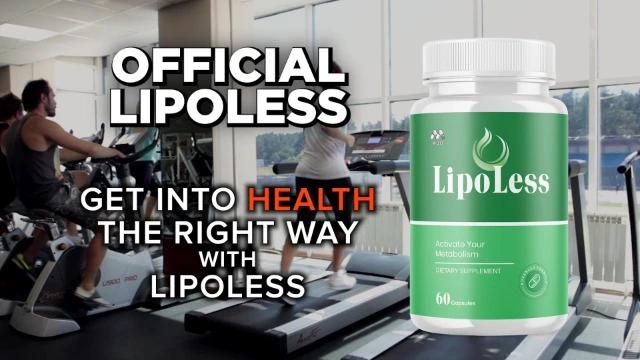
LipoLess is a vegan, non-GMO daily supplement built on a 600 mg Advanced Metabolism Blend with magnesium — designed to work alongside the habits in this guide, not replace them.
See LipoLess Packages3. Don’t undereat — it backfires
It feels logical that eating as little as possible would be the fastest route to results. In practice, very aggressive calorie cuts often lead to more muscle loss, low energy, and eating patterns that are impossible to sustain. Your body is remarkably good at defending itself against prolonged, severe restriction. Under-eating for long stretches is also one of the classic reasons weight loss stops, because the body quietly trims the energy it spends as the scale falls.
A moderate, patient approach — a modest calorie deficit paired with enough protein and strength work — tends to protect your metabolism far better than crash dieting. Slower and steadier really is the more durable path.
4. Move more outside the gym (NEAT)
NEAT stands for non-exercise activity thermogenesis — the energy you burn through everything that isn’t formal exercise: walking, taking the stairs, standing, fidgeting, doing chores. For many people this quietly outweighs the calories burned in a single workout, and it can vary enormously from one person to the next.
The best part is how low-friction it is. A short walk after meals, standing during phone calls, parking farther away, or setting an hourly reminder to move all add up. If you want one high-value habit to start with, a 10–15 minute walk after your largest meal is hard to beat.
5. Sleep and stress: the overlooked levers
Poor sleep and chronic stress can work against every other habit on this list. Short sleep is linked with stronger appetite signals and lower energy for movement the next day, and ongoing stress can make consistency harder to maintain. Treating sleep as a performance tool — a regular schedule, a dark cool room, and a wind-down routine — supports both your energy and your food choices. Sleep and stress are also the usual answer for anyone eating well, training regularly and still asking why they cannot lose weight even though they eat healthy.
You don’t need perfection. Even nudging your average sleep from six hours toward seven or eight, most nights, can make the other habits feel dramatically easier to keep.
6. Stay hydrated — and mind the extras
Water is involved in nearly every metabolic reaction, and even mild dehydration can leave you feeling flat and reaching for a snack when you actually needed a glass of water. Keeping a bottle within reach and drinking with each meal is an easy default.
Micronutrients matter too. Magnesium, for example, is an essential mineral that contributes to normal energy-yielding metabolism and to healthy muscle and nervous-system function — yet many everyday diets fall short of the recommended intake. Leafy greens, nuts, seeds, beans and whole grains are good food sources, and it’s one of the nutrients a metabolism-focused supplement can help top up.
Where a metabolism-support supplement fits
No capsule replaces the fundamentals — muscle, protein, movement, sleep and hydration will always do the heavy lifting. But once those basics are in place, a clean daily supplement can be a convenient way to support the routine. That’s the role LipoLess is built for: a concentrated 600 mg Advanced Metabolism Blend with magnesium in a simple two-capsule serving, formulated to sit quietly in the background of a healthy lifestyle.
When you’re comparing options, favour a short, transparent label over a long “pixie-dust” ingredient list, look for third-party testing, and be wary of any product promising effortless results. Realistic expectations are a feature, not a weakness.
Putting it together: a simple weekly plan
You don’t have to do everything at once. Pick two habits to start this week — say, protein at breakfast and a post-dinner walk — and layer in the rest as they become automatic. A workable starting week might look like: strength train on two or three days, walk daily, build meals around protein, aim for seven-plus hours of sleep, and keep water within reach. Then let consistency do the compounding.
Ready to support your metabolism routine?
Pair these habits with a daily two-capsule metabolism supplement — vegan, non-GMO and protected by a 60-day money-back guarantee.
Order LipoLess TodayFrequently asked questions
Can you really speed up a slow metabolism?
You can’t rewrite your genetics, but you can influence the biggest movable parts of your metabolism — how much lean muscle you carry, how much you move through the day, and how well you sleep. Those levers add up over time, which is why habits matter more than any single trick.
Does eating more protein help your metabolism?
Protein has a higher thermic effect than carbohydrate or fat, meaning your body uses more energy digesting it. It also helps you preserve lean muscle while managing calories, and it tends to be more filling — three reasons it’s a useful anchor for most meals.
Do metabolism supplements work?
A supplement is a support, not a substitute for the basics. A daily metabolism-support formula such as LipoLess is designed to complement a balanced diet and an active routine — not replace them. Look for a short, transparent label and realistic expectations rather than dramatic promises.
How long does it take to see a difference?
Metabolic habits build gradually. Most people find that consistency over several weeks to a few months — steady movement, enough protein, and regular sleep — is what makes a routine feel sustainable, rather than any quick fix.
Is magnesium related to metabolism?
Magnesium is an essential mineral that contributes to normal energy-yielding metabolism and to healthy muscle and nervous-system function. Many everyday diets fall short of the recommended intake, which is one reason it appears in metabolism-focused formulas.
References
- National Institutes of Health, Office of Dietary Supplements. “Magnesium — Fact Sheet for Health Professionals.” ods.od.nih.gov
- U.S. Department of Agriculture. “Dietary Guidelines for Americans, 2020–2025.” dietaryguidelines.gov
- Centers for Disease Control and Prevention. “Physical Activity Basics.” cdc.gov
- National Heart, Lung, and Blood Institute. “Aim for a Healthy Weight.” nhlbi.nih.gov
- MacKenzie-Shalders K, et al. “The effect of exercise interventions on resting metabolic rate: A systematic review and meta-analysis.” Journal of Sports Sciences, 2020. PubMed 32397898
- Leidy HJ, et al. “The role of protein in weight loss and maintenance.” The American Journal of Clinical Nutrition, 2015. PubMed 25926512
† These statements have not been evaluated by the Food and Drug Administration. This product is not intended to diagnose, treat, cure or prevent any disease. This article is for general information only and is not medical advice; consult a qualified healthcare professional before changing your diet, exercise or supplement routine.